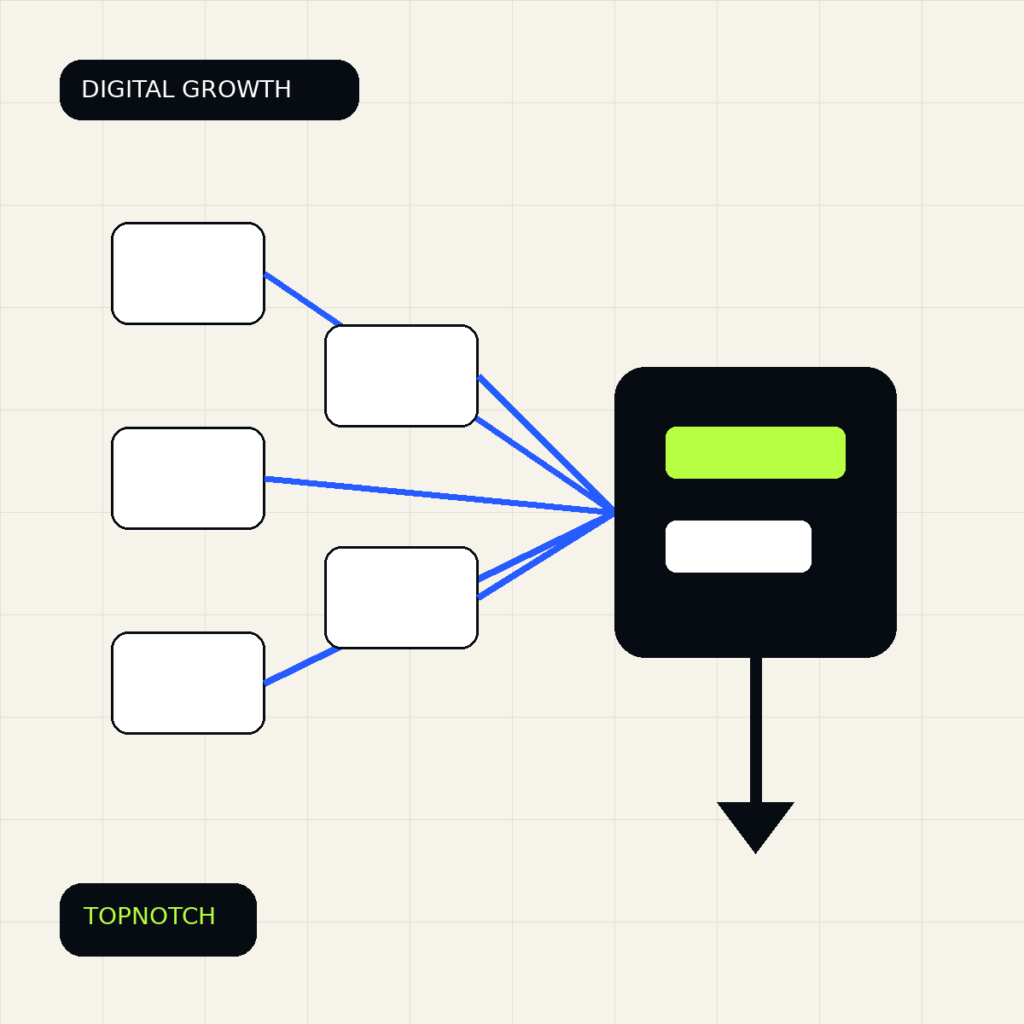
A blog becomes useful to a business when it does more than collect articles. The strongest content libraries connect questions people search for with the services, products or decisions the company can actually help with. That connection is a content funnel, and it does not need to be complicated.
Start with the commercial page
Choose an important service or product page and write down the questions a potential customer asks before they are ready to act. Some questions will be informational, some comparative and some directly commercial.
For example, a WordPress speed service may be supported by articles about oversized images, caching, Core Web Vitals or diagnosing slow plugins.
Create articles for distinct questions
Do not publish five articles that answer the same query with slightly different wording. Each article should have a clear job and a unique primary question. Overlapping articles can compete with each other and make the site harder to maintain.
Where older articles overlap heavily, consolidate them carefully instead of continuing to add near-duplicates.
Link toward the next useful step
An educational article should link to related deeper resources and, when appropriate, to the relevant service page. The link should make sense in context rather than appearing as a generic sales block on every post.
The service page should also link back to useful supporting guides. That creates a two-way topic cluster rather than a one-directional funnel.
Use categories as real editorial topics
Categories are useful when they represent ongoing subjects with multiple quality articles. Empty categories or one-off taxonomies create thin archive pages that add little value.
Keep a small set of categories with clear meaning and let them grow as real content is published.
Measure the whole path
Track which articles bring search visitors, which internal links are used and whether those visitors eventually reach commercial pages or key events. A high-traffic article that never supports the business may still be valuable, but you should understand its role rather than assuming all traffic is equal.
Bottom line
A practical content funnel starts with real customer questions, answers each question well and gives interested readers a logical route to the next decision. The structure matters as much as the publishing volume.